
Pokémon GO Regional Pokémon
Every region-exclusive Pokémon we can stand behind, grouped by where to go — so you can plan one trip instead of 51.
Regional Pokémon by region
51 species, grouped by where to go — with a live check on every one: whether it is up anywhere in the world right now, and where.
Counts are worldwide, not near you, and they rotate by the minute. Opening a coordinate spends one of your free previews — the first three need no login.
The Americas
Pokémon GO treats “the Americas and Greenland” as one bucket for its three-way splits, but several entries below are far tighter than that. A US-wide flight will not get you Hawlucha, a Mexico City teleport will not get you Carnivine, and only Hawaii gets you Comfey — so read the location line rather than the heading.

Tauros #128
The United States and southern Canada
Checking live spawns…
The original North American exclusive, in the game since 2016 and still one of the most-traded regionals simply because so many US trainers hold spares. It never evolves, so a single catch closes the entry for good. Anywhere in the continental US works; Canada thins out as you go north, and Mexico does not count.

Heracross #214
Central and South America
Checking live spawns…
A Gen 2 exclusive to the Latin American band, from Central America down to Argentina. It does not evolve, but Mega Heracross is released, and Mega Energy comes from its own raids and from walking it as your buddy — so catch several while you are in region rather than one. A high-IV Heracross is also a usable bug attacker and a strong trade chip.

Carnivine #455
The southeastern United States
Checking live spawns…
Tight enough that a New York or California teleport misses it — aim for Florida, Georgia, Alabama, Mississippi, Louisiana or the Carolinas. It has no evolution, so one catch is enough. Do not plan to pick up Bouffalant on the same hop; they sit at opposite ends of the country.

Azelf #482
The Americas and Greenland
Checking live spawns…
The lake trio splits three ways: Azelf here, Mesprit across Europe, Africa, the Middle East and India, Uxie across Asia-Pacific. All three are five-star raid bosses, so you need an active raid and a group, not just a spawn. Niantic makes the whole trio global during some Raid Days — by far the cheapest route.

Panpour #515
The Americas and Greenland
Checking live spawns…
The water monkey of the elemental trio, divided the same three ways as the lake trio but a plain wild spawn rather than a raid. It evolves into Simipour with a Unova Stone, which is rare, so bank the candy while you are in region instead of catching exactly one and leaving.

Maractus #556
Mexico, Central America and South America
Checking live spawns…
A cactus Pokémon on the same Latin American band as Heracross, plus Mexico — which Tauros pointedly does not cover, so do not plan one Mexican hop for both. It does not evolve and it is not competitively useful, so catch one, transfer the duplicates and spend the rest of the window on Heracross candy.

Bouffalant #626
New York and the surrounding northeastern states
Checking live spawns…
The tightest US exclusive on this list. New York state and New York City are the parts we would actually stake a teleport on, with the wider northeast reported more thinly. It has no evolution. Times Square is a dense spawn area regardless — it is on our hotspots page with coordinates.

Hawlucha #701
Mexico
Checking live spawns…
Mexico is the area we can stand behind — go there rather than betting on the southern US or Central America. A fighting and flying luchador with no evolution, so one catch closes it. Mexico City and Guadalajara have heavy spawn density if you are teleporting in for a short window.

Comfey #764
Hawaii
Checking live spawns…
Hawaii, and nowhere else. This entry used to carry a vague tropical band and a warning attached to it, because that was as far as we could get on our own; the list we reconcile against names Hawaii outright, which is a far more useful answer. A fairy with no evolution, and Honolulu has dense spawn clusters.
Europe
Europe is the second of the three buckets — officially “Europe, the Middle East, Africa and India”, so Mesprit and Pansear below are catchable well outside Europe too, anywhere in that bucket. The rest are tighter: one wants the UK specifically, one is centred on France, and one comes out of eggs rather than wild spawns.

Mr. Mime #122
Europe
Checking live spawns…
Europe's launch-day exclusive and the one most non-European trainers are still missing. Anywhere in Europe spawns it. Note this is Kantonian Mr. Mime — Galarian Mr. Mime was released worldwide through eggs and events and is not a regional, although its evolution Mr. Rime is well worth having.

Mime Jr. #439
Europe — from 5 km eggs, not wild spawns
Checking live spawns…
The awkward one. Mr. Mime's baby form comes from 5 km eggs collected in Europe rather than from wild spawns, so a five-minute teleport will not do it: spin European stops, bank the eggs, then walk them out. It evolves back into Mr. Mime, so it is a second European slot rather than a shortcut to the first.

Mesprit #481
Europe, the Middle East, Africa and India
Checking live spawns…
The European member of the lake trio, and a five-star raid boss — you need a live raid in region and enough trainers to clear it, which remote passes can solve if you have friends nearby. Like Uxie and Azelf it goes worldwide during some Raid Days, which is far easier than travelling for it. One deliberate deviation: the list we reconcile against words this bucket as “Europe, Middle East, Asia and Africa”; we drop the Asia part, because the same list gives Uxie the Asia-Pacific third of the trio and both cannot hold Asia. India is the piece of that wording we are confident of, so it stays.

Pansear #513
Europe, the Middle East, Africa and India
Checking live spawns…
The fire monkey, sharing Mesprit's region but spawning in the wild rather than in raids. It evolves into Simisear with a Unova Stone. Spawns are frequent enough that a short teleport into any European city usually produces one — catch a handful so the candy is ready when a stone finally drops. Same deliberate deviation as Mesprit: the list we reconcile against words this bucket as “Europe, Middle East, Africa and India” with Asia attached elsewhere in the trio, so we keep the narrower reading rather than claim Asia twice.

Klefki #707
France, Luxembourg, western Switzerland and the UK's south-east coast
Checking live spawns…
Wider than the single-country exclusive it is usually filed as, but France is still where we would send you — Paris, Lyon or Marseille. Luxembourg, western Switzerland and the south-east English coast sit on the edge of the range and are a gamble by comparison. Steel and fairy, no evolution, so one catch is the whole job.

Stonjourner #874
The United Kingdom
Checking live spawns…
Stonehenge in Pokémon form, exclusive to the UK — England, Scotland, Wales and Northern Ireland all count, the rest of Europe does not. It has no evolution and it is not a raid boss, so a wild catch is the only route. Teleport into a dense London or Manchester spawn cluster and wait it out.
Africa & the Middle East
Exclusives that need you on the African continent or in the eastern Mediterranean. Mesprit and Pansear are catchable here too — the “Europe” bucket officially includes the Middle East, Africa and India — which makes an Egypt trip better value than the heading suggests.

Tropius #357
Africa and the Middle East
Checking live spawns…
A banana-necked grass and flying Pokémon covering the whole African continent plus the Middle East, which makes it one of the easiest regionals to actually land — almost any teleport onto the continent works. It has no evolution. A single Egypt trip covers both Tropius and Sigilyph.

Sigilyph #561
Egypt and Greece
Checking live spawns…
A psychic and flying Pokémon themed on ancient line art, restricted to the eastern Mediterranean. Egypt and Greece are the two countries we would stake a trip on. No evolution, so one catch finishes it, and both Cairo and Athens have dense stop clusters — a single teleport window is usually enough.
Asia
The third bucket is “Asia-Pacific”, which also covers Australia and New Zealand — so Uxie and Pansage can be cleared from either side. The other two are tighter: East Asia for the leek duck, the Indian subcontinent and South-East Asia for the tortoise.

Farfetch'd #83
East Asia — Japan, South Korea, Taiwan, Hong Kong
Checking live spawns…
The leek duck, exclusive to East Asia since launch. This is Kantonian Farfetch'd: the Galarian form went worldwide through eggs and raids and is not a regional, and Sirfetch'd evolves from that Galarian form, not this one. So the Kantonian bird still needs a Japan or Korea teleport of its own.

Torkoal #324
India and South-East Asia
Checking live spawns…
A coal-burning tortoise across the Indian subcontinent and South-East Asia, with no evolution. India is the part we would stake a teleport on; the list we reconcile against also claims western Asia, which we have not been able to confirm, so treat the Middle East as unproven. India is our second-biggest member country — ask in the trade channels before you fly.

Uxie #480
Asia-Pacific
Checking live spawns…
The Asia-Pacific member of the lake trio, and a five-star raid boss rather than a wild spawn, so you need an active raid in region plus enough trainers to clear it. Japan, Australia and New Zealand all count as Asia-Pacific. Watch for Raid Days that make the trio temporarily global.

Pansage #511
Asia-Pacific
Checking live spawns…
The grass monkey, same region as Uxie but a plain wild spawn, which makes it far easier to clear. It evolves into Simisage with a Unova Stone. Catch a handful for candy rather than a single dex entry — the stone is the bottleneck and you want the evolution ready when one arrives.
Australia, New Zealand & the Pacific
Australia and New Zealand count as Asia-Pacific for the three-way splits, so one trip down here also picks up Uxie and Pansage, and Chatot on top. Australia additionally sits on the eastern side of most of the split pairs below, which makes it one of the best-value regional trips there is to plan.

Kangaskhan #115
Australia
Checking live spawns…
Australia's launch-day exclusive and one of the most requested trades in the game, which makes spares genuinely valuable to someone outside the region. Australia is the country we will stake a trip on — this entry used to stretch to New Zealand and Papua New Guinea and no longer does. Mega Kangaskhan is released, so catch several for Mega Energy rather than one.

Relicanth #369
New Zealand and the Pacific islands
Checking live spawns…
The narrowest Pacific exclusive — New Zealand and the surrounding island nations, not mainland Australia, which is why it does not pair with Kangaskhan as neatly as the heading suggests. Auckland or Wellington is the reliable teleport, and it has no evolution. Chatot, Uxie and Pansage are all catchable on the same hop.
Locked by latitude, not by continent
These ignore borders entirely — what matters is how far north or south of the equator you land, and for one of them how close to a coast you get. A Paris teleport misses Pachirisu and a Helsinki one does not, even though both are “Europe”.

Corsola #222
Coastal tropics — roughly 31°N to 26°S
Checking live spawns…
A coral Pokémon restricted to a latitude band and to coastlines rather than to a continent: Hawaii, southern Florida, the Caribbean, Central America, southern Asia, northern Australia and coastal Africa all qualify, while inland cities inside the same band do not. Galarian Corsola is not a regional — it arrived worldwide through raids and eggs.

Pachirisu #417
The far north — Alaska, Canada, Russia, Scandinavia and Iceland
Checking live spawns…
The cold-country exclusive. Anywhere far enough north works: Anchorage, most of Canada, Russia, Norway, Sweden, Finland or Iceland. Plain “Europe” is not enough — a Paris teleport misses it and a Helsinki teleport does not. It has no evolution, so one catch is the entire job.

Chatot #441
The southern hemisphere
Checking live spawns…
Anywhere below the equator counts: South America, southern Africa, Australia and New Zealand. That makes it the easiest regional to combine with another trip — one Australian teleport picks up Chatot, Kangaskhan, Uxie and Pansage together. It has no evolution and it is a common spawn in region.
Split by region — one side is already yours
Each of these divides the world rather than sitting in one country: a pair that takes half the planet each, or a single species whose forms do. One side is already spawning where you live, so only the other is ever a trip — with a few single-country trims bolted onto the same mechanic, which is why Furfrou wants France, Japan and Egypt specifically. We name which half is which, reconciled against the GO Hub regional list on the date stamped at the top of this page and re-checked against our own regional coordinate channel. Treat those halves as dated rather than permanent — Niantic has rotated hemisphere pairs before, and an old list keeps the pre-swap answer — so confirm a live sighting on the far side before you commit a long-haul teleport. The upside: Asia and Australia sit on the same side of every line drawn here, so one well-chosen trip out that way clears several at once — while an African trip clears the wild pairs but leaves you on Solrock's side of the meridian.
Tauros (Paldean breeds) #128
Three breeds, split east and west — plus one Iberian exclusive
Raids and eggs, not wild spawns — the feed cannot answer this row. Search a form in Discord
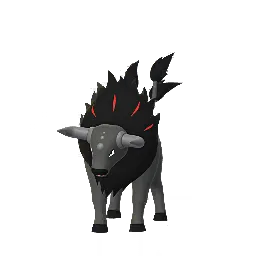
Paldea's three Tauros breeds are region-locked even though Kantonian Tauros above is a straightforward North American exclusive. Blaze east of the meridian, Aqua west of it, and Combat Breed only on the Iberian Peninsula — that last one is the hard part, because Spain or Portugal specifically is a much narrower target than “Europe”. All three are separate dex entries, and none of them spawns in the wild: the breeds come from raids and eggs, so being in the right country is not enough and a live spawn feed cannot find you one.
- Blaze Breed — The Eastern Hemisphere
- Aqua Breed — The Western Hemisphere
- Combat Breed — The Iberian Peninsula — Spain and Portugal

Volbeat #313
Europe, Asia and Australia
Checking live spawns…
The male half of a two-Pokémon world split: Volbeat takes Europe, Asia and Australia, Illumise takes the Americas and Africa. Neither evolves, so it is one catch each with no candy grind. Niantic has rotated hemisphere pairs before, so confirm a live sighting before you book anything long-haul on this.

Illumise #314
The Americas and Africa
Checking live spawns…
Volbeat's counterpart, holding the Americas and Africa. If Volbeat is your local spawn then Illumise is the trip, and the reverse if you live in the west. A South American or African teleport picks up Seviper, Throh and Durant on the same side of the same line. Firefly-themed bug, no evolution.

Zangoose #335
Europe, Asia and Australia
Checking live spawns…
The mongoose half of a classic version-exclusive pair, carried into Pokémon GO on the same line Volbeat uses: Europe, Asia and Australia for Zangoose, the Americas and Africa for Seviper. Normal type, no evolution, one catch and done. Common enough inside its own half that a short window is plenty.

Seviper #336
The Americas and Africa
Checking live spawns…
Zangoose's snake counterpart across the Americas and Africa. One of the two is spawning near you right now and the other is the trip. Poison type, no evolution. Both are frequent spawns inside their own territory, so a short teleport window is enough for whichever one you are missing.

Lunatone #337
The Western Hemisphere — west of the Greenwich Meridian
Checking live spawns…
Moon to Solrock's sun, and the pair whose dividing line is stated most precisely: the Greenwich Meridian itself, with Lunatone west of it. That puts the Americas solidly in Lunatone country. Rock and psychic, no evolution, and common enough inside its own half that a short teleport window is plenty — though countries sitting on the line are worth a live check.

Solrock #338
The Eastern Hemisphere — east of the Greenwich Meridian
Checking live spawns…
Lunatone's sun counterpart across the Eastern Hemisphere, so Europe, Africa, Asia and Australia all spawn it and a European teleport is the cheapest option for most people missing it. Both halves are common inside their own territory — there is no rare spawn window to plan around, only the correct side of the world.

Shellos #422
Both hemispheres — one sea form on each side
Checking live spawns…
Shellos and its evolution Gastrodon come in two sea forms, and we can now name which sits where rather than telling you to work it out: West Sea pink in the west, East Sea blue in the east. Both count separately in a full Living Dex and both evolve, so bank candy while you are over there instead of catching exactly one.
- West Sea (pink) — The Western Hemisphere
- East Sea (blue) — The Eastern Hemisphere

Throh #538
The Americas and Africa
Checking live spawns…
The red judo fighter, holding the Americas and Africa while Sawk takes Europe, Asia and Australia. Fighting type, no evolution. Worth catching a few if you make the trip, because a high-IV fighting type is never wasted — and the same hop covers Illumise, Seviper and Durant on the same side of the line.

Sawk #539
Europe, Asia and Australia
Checking live spawns…
Throh's blue karate counterpart across Europe, Asia and Australia — the same half Volbeat, Zangoose and Heatmor take, which is what makes one well-chosen long-haul trip clear four of these at once. Fighting type, no evolution. Check a live sighting before you commit, because these lines have moved before.

Basculin #550
Both hemispheres — one stripe on each side
Checking live spawns…
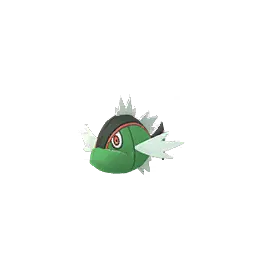
Red-Striped and Blue-Striped Basculin divide the world, and the halves are named above rather than left to you: red in the east, blue in the west. White-Striped Basculin is the Hisuian form and is not a regional — it arrived worldwide alongside Basculegion. So the job here is a single stripe, whichever one is not already spawning at home.
- Red-Striped — The Eastern Hemisphere
- Blue-Striped — The Western Hemisphere

Heatmor #631
Europe, Asia and Australia
Checking live spawns…
The anteater half of a hemisphere pair, taking Europe, Asia and Australia while Durant takes the Americas and Africa. Fire type, no evolution. Heatmor and Durant are predator and prey in the lore, which is why they were split in the first place — and one of the two is already in your local spawn pool.

Durant #632
The Americas and Africa
Checking live spawns…
Heatmor's steel ant counterpart across the Americas and Africa, with no evolution. If you are planning one long-haul teleport to clear several splits at once, note that Illumise, Seviper, Throh and Durant all sit on the same side of the same line — a single well-chosen trip picks up all four together.

Vivillon #666
Pattern is set by region — collected through postcards, not spawns
Checking live spawns…
The odd one out, and the honest answer is that travel does not help. Vivillon's pattern is decided by the region a postcard came from, so you collect patterns by trading postcards with players abroad rather than by teleporting anywhere. No coordinate clears this one — friends in other countries do. It is listed because people search for it as a regional.

Flabébé #669
Three flower colours, one per world bucket
Checking live spawns…
Flabébé's flower colour is set by region and carries through Floette and Florges, so each colour is effectively three dex entries rather than one. Red, yellow and blue split across the same three buckets the lake trio uses. Orange and white have only ever appeared through events and are not regional colours.
- Red Flower — Europe, the Middle East and Africa
- Yellow Flower — The Americas
- Blue Flower — Asia-Pacific

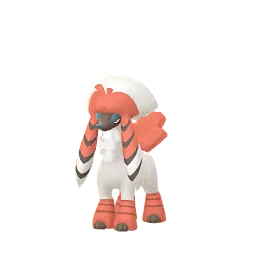
Furfrou #676
Six region-locked trims
Checking live spawns…
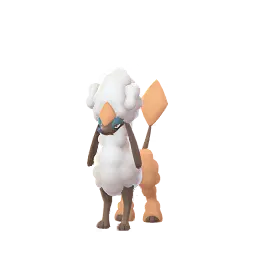
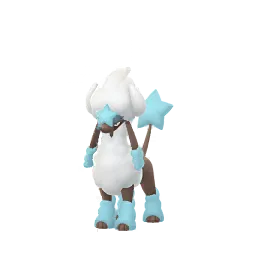
The base Pokémon is global, but six of its trims are region-locked and the trims are what people actually hunt. Debutante, Diamond and Star split the world three ways; La Reine, Kabuki and Pharaoh need France, Japan and Egypt specifically. Trims rotate with Fashion Week events, so confirm the current set is live before you travel for one.
- Debutante Trim — The Americas
- Diamond Trim — Europe, the Middle East and Africa
- Star Trim — Asia-Pacific
- La Reine Trim — France
- Kabuki Trim — Japan
- Pharaoh Trim — Egypt

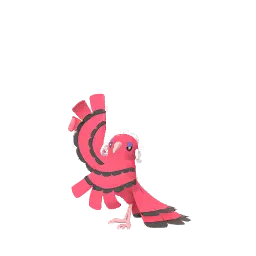
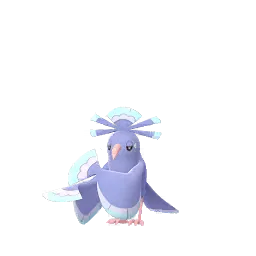
Oricorio #741
Four styles, each locked to a different part of the world
Checking live spawns…
Four styles, so four dex entries rather than one, and each has its own region. Pa'u is the awkward one: it wants the tropical island chains rather than a mainland, which is a different trip from Sensu's Asia-Pacific even though they overlap on a map. Style-to-region has changed before, so confirm a live sighting before a long-haul flight.
- Baile Style (fire/flying) — Europe, the Middle East and Africa
- Pom-Pom Style (electric/flying) — The Americas
- Pa'u Style (psychic/flying) — African, Asian, Pacific and Caribbean islands
- Sensu Style (ghost/flying) — Asia-Pacific

Celesteela #797
The southern hemisphere
Checking live spawns…
An Ultra Beast rather than a wild spawn, so the lock sits on a five-star raid: Celesteela raids appear only in the southern hemisphere while Kartana takes the north. Remote raid passes solve this without a flight if you have friends on the other side, which is much cheaper than the teleport.

Kartana #798
The northern hemisphere
Checking live spawns…
Celesteela's northern counterpart and the more valuable of the two — Kartana is a top-tier grass attacker, so catch several rather than the single one a dex needs. Northern hemisphere five-star raids only. Niantic has made Ultra Beasts global for GO Fest weekends before, which is the cheapest route to both halves.

Stakataka #805
The Eastern Hemisphere
Checking live spawns…
The eastern half of the second Ultra Beast pair, appearing in five-star raids east of the Greenwich Meridian while Blacephalon takes the west. Raids rather than spawns, so you need a live boss and enough trainers in region. A serviceable rock attacker, but for most people this is a dex entry and a trade chip.

Blacephalon #806
The Western Hemisphere
Checking live spawns…
Stakataka's western counterpart, raiding across the Americas. Between the two Ultra Beast pairs, one trip in the right direction clears two at once — a South American raid weekend covers Celesteela and Blacephalon together. Watch the event calendar, because GO Fest has made the whole Ultra Beast set global before.

Squawkabilly #931
Two plumages, one per hemisphere
Checking live spawns…
A Gen 9 parrot split down the middle: green in the east, blue in the west, no evolution on either. The White and Yellow plumages are not covered by the list we reconcile against, so treat those two as unconfirmed rather than assuming they follow the same line — that is the sort of assumption that costs a flight.
- Green Plumage — The Eastern Hemisphere
- Blue Plumage — The Western Hemisphere















Locked to a biome, not to a place
These are not region-locked at all — they are biome-locked, and Pokémon GO does not publish the biome map. Beach, desert and forest do not follow borders, so there is no country to name and no teleport we would stake on your behalf. They sit in their own group rather than filed under a continent because filing them under one is how someone wastes a flight: each needs a live sighting before you go.

Silicobra #843
Desert biomes — no country is a reliable target
Checking live spawns…
Needs confirming before you travel
Not a region lock at all: Silicobra is tied to desert biomes, and Pokémon GO does not publish its biome map, so no country name is a safe teleport. Arid parts of Australia, the American southwest, North Africa and the Middle East are the usual reports. It evolves into Sandaconda. Confirm a live sighting first.

Toedscool #948
Forest biomes — no country is a reliable target
Checking live spawns…
Needs confirming before you travel
Forest biomes rather than a country. It behaves like a Paldean Tentacool and evolves into Toedscruel, so bank candy if you find a spot that actually produces it. Biome boundaries are not published and do not follow borders, which is why a live sighting is the only way to know your target works.

Wiglett #960
Beach biomes — no country is a reliable target
Checking live spawns…
Needs confirming before you travel
Beach biomes: coastlines rather than countries, which is exactly why it is not filed under a continent here. It evolves into Wugtrio. Plenty of coastal cities report it and plenty of equally coastal ones do not, so pick your spot from a live sighting rather than from a map of the sea.

Item and storage upgrades are 200 coins each — 15,500 coins for $50, about half the in-game rate.
How the live check works
51 species here, 66 separate dex entries once the multi-form splits are counted one by one — not counting Vivillon's patterns, which come from postcards rather than a place. The two groups at the end are the 22 that divide the world rather than sitting in one country, and the 3 locked to a biome rather than to a place at all.
Every entry carries a live check against our coordinate feed: whether one is up anywhere in the world right now, how many, and where the best example of it is. On the 6 species locked by form rather than by species — the sea forms, the stripes, the flower colours, the trims, the styles and the plumages — it names the form the feed found, so an East Sea Shellos is not read as a West Sea one. The Paldean Tauros breeds are the one row with no live check at all: they come from raids and eggs rather than wild spawns, so a spawn feed cannot answer for them either way.
The short answer
A region-exclusive Pokémon only spawns in one part of the world. Niantic locks each one to a continent, a single country, a latitude band, or one half of the planet — so a trainer in Berlin cannot catch Tauros and a trainer in Chicago cannot catch Mr. Mime. This page lists 51 species and 66 dex entries — the difference is the species whose region-locked forms each count separately, like Furfrou's six trims — grouped by where to go rather than alphabetically, because that is what you actually plan a trip around. 22 of them split the world rather than sitting in one country, and this page names which half is which. Last verified 24 August 2026.
Why region-exclusives exist
Pokémon GO is a game about where you physically are, and regional exclusives are the strongest expression of that: they give a country something no other country has, they push trainers to trade across borders, and they make the game's world map mean something. Several are jokes about the place they belong to — Stonjourner is Stonehenge, Klefki is French, Hawlucha is a Mexican luchador, Kangaskhan carries a joey around Australia.
The catch is that the rules are set by Niantic and change without a patch note. A species can be swapped to the opposite hemisphere, widened to a whole continent, or made global for a weekend during an event. That is why this page carries a verification date and why some entries are marked as needing confirmation instead of being stated as fact — a regionals list that is confidently wrong sends someone to the other side of the world for nothing.
The pairs that split the world in half
22 of the 51 entries above divide the world rather than sitting in one country. Most come in pairs — Volbeat and Illumise, Zangoose and Seviper, Heatmor and Durant, Throh and Sawk — and each half of the pair takes one half of the planet. The practical consequence is the good news: one of every pair is already spawning where you live, so only the other one is ever a trip.
Every one of those halves is now named on this page. Volbeat, Zangoose, Sawk and Heatmor take Europe, Asia and Australia; Illumise, Seviper, Throh and Durant take the Americas and Africa. Lunatone sits west of the Greenwich Meridian and Solrock east of it, West Sea Shellos west and East Sea east, Blue-Striped Basculin west and Red-Striped east.
Those are two different lines, and the difference is worth an extra minute before you book anything. The four wild pairs put Africa with the Americas, while the meridian splits put Africa in the east — so an African trip clears Illumise, Seviper, Throh and Durant but leaves you on Solrock's side, not Lunatone's. Asia and Australia sit on the eastern side of both lines, which is what makes one trip out there the efficient direction.
The halves are reconciled against published regional data and re-checked on 24 August 2026 against our own regional coordinate channel. Treat them as a dated answer rather than a permanent one: Niantic has rotated hemisphere pairs before, and an old list keeps the pre-swap answer long after it stops being true. Work out which half you already have from your local spawns, then confirm a live sighting on the far side before you spend the teleport.
That last step is the part a list cannot do for you. Any A–Z page — this one included — is only as current as the day it was written, whereas a live feed answers “which half is it today?” by showing you what is being found right now. Our free coordinates feed and 100% IV feed post live spawns with their coordinates as they are found, and the regional channel in Discord is dedicated to these species — so you can see a Seviper actually sitting in the region you were about to fly to, rather than take a page's word for it.
The Living Dex problem
A Living Dex means holding one of every Pokémon in your storage at the same time, rather than just having registered them. Regionals are the wall every Living Dex hits: you can grind raids for legendaries, hatch your way to the rare babies and wait out event spawns, but no amount of playing in one country will ever produce a Relicanth if you live in Ohio. The last slots are always regional.
There are exactly three ways past that wall, and only one of them is free: fly there, trade for it, or teleport to a live coordinate in the region. Our Living Dex tracker shows you which entries you are actually missing — tick off what you have caught and the regionals stand out immediately, because they are the ones that never fill in on their own.
Three ways to get a regional
- ✦ Travel. The intended route, and the expensive one. A single well-planned trip clears several at once — Australia alone covers Kangaskhan, Chatot, Uxie and Pansage, and the hemisphere pairs all split the world along roughly the same line.
- ✦ Trade. A Kangaskhan caught in Sydney is still a Kangaskhan after it changes hands, so the fastest route for most people is finding someone who lives where the Pokémon does. Build a For Trade / Looking For list with our trade list generator — it lets you specify the exact form, which matters for the split species where the wrong half is worthless to you.
- ✦ Coordinates. Teleport to a live spawn in the region and catch it yourself. We run a dedicated regional coordinate channel in Discord, plus regional-form search in the Candy bot — free members get one Candy Bot search a day — alongside the 100% IV feed. Every channel is readable by every member, and free members get 10 coordinate reveals a day — enough to clear several regionals in a week without paying anything.
If you are teleporting for these, two things save wasted hops: the free coordinates feed for live spawn points, and our hotspots list for dense spawn areas in the right cities — landing in the correct country but a dead suburb is the usual way a regional trip fails.
Regional forms are mostly not regional Pokémon
This is the most common mix-up, and it costs people flights. Alolan, Galarian, Hisuian and Paldean forms are regional forms — a different look for a species from a different game region — and Pokémon GO has released most of them worldwide through eggs, raids and events. Galarian Farfetch'd, Galarian Mr. Mime and Galarian Corsola are all globally available, even though their Kantonian originals are genuine region-exclusives sitting on this list.
Paldea is where that rule breaks, so it is worth stating rather than glossing. The three Paldean Tauros breeds and Squawkabilly's plumages are region-locked in the ordinary sense — Blaze east, Aqua west, Combat Breed only on the Iberian Peninsula — so they are on this list alongside the Kantonian originals, not filed away as “just a regional form”.
Furfrou is the other one people ask about, and this page used to leave it off on the grounds that the base species is global. That was true and unhelpful: nobody hunts a plain Furfrou, they hunt La Reine or Pharaoh, and the trims are region-locked. All six are listed above with the country or bucket each one needs. Trims rotate with Fashion Week events, so confirm the one you want is currently live before you travel for it — the same caveat applies to Flabébé's flower colours and Oricorio's four styles.
What we left off, and why
Longer regional lists exist. Ours is shorter on purpose: an entry only appears here if we are confident the species is region-exclusive and confident enough about where it spawns to send a member there. Where a species splits the world into halves — the version-exclusive pairs, the sea forms, the flower colours — we now name the half, reconciled against published regional data on 24 August 2026. That is a dated answer with a shelf life, not a permanent one, which is why the verification stamp and the live feed both matter.
Flapple and Appletun are not region-locked, so they are not on this list. Applin is global, and the evolution mechanic that decides which of the two you get is not a regional lock — so sending someone abroad for one would cost them a flight for nothing. Rufflet and Vullaby, Skrelp and Clauncher, and Oranguru and Passimian get asked about often enough to be worth naming here too, and they are off for the same reason: we could not confirm a regional lock on any of them.
Spritzee and Swirlix were on this list until 24 August 2026 as a hemisphere pair. They came off during the reconciliation above: the outside list does not carry them, and we could not confirm a lock in our own channel either. Removing an entry we cannot stand behind is the same rule that keeps the unconfirmed species off — it just costs us a number rather than earning us one.
Wiglett, Silicobra and Toedscool have their own group rather than a continent, because they are locked to a biome — beach, desert and forest — and Pokémon GO does not publish the biome map. Filing them under a country would be tidier and would be a lie: two equally coastal cities do not reliably both produce a Wiglett. They are flagged as needing a live sighting first.
When a regional changes — a swap, a widening, an event that makes one global — this page gets the correction and the verification date at the top moves. That is the whole reason to bookmark it rather than a static A–Z.
Regional Pokémon — FAQ
- What are regional Pokémon in Pokémon GO?
- Region-exclusive Pokémon only spawn in one part of the world. Niantic locks them to a continent, a country, a latitude band or one half of the planet, so a trainer in Europe cannot catch Tauros and a trainer in the United States cannot catch Mr. Mime without travelling, trading or using coordinates.
- How many regional Pokémon are there in Pokémon GO?
- This list carries 51 region-exclusive species — 66 separate dex entries once the multi-form splits like Furfrou's trims and Oricorio's styles are counted one by one, not counting Vivillon's patterns, which come from postcards rather than a place. 48 of the 51 carry a location we would send a member to as of 24 August 2026; the rest are flagged rather than guessed at. We deliberately do not pad the count.
- Which half of the world does each split pair spawn in?
- Volbeat, Zangoose, Sawk and Heatmor take Europe, Asia and Australia; Illumise, Seviper, Throh and Durant take the Americas and Africa. Lunatone is west of the Greenwich Meridian and Solrock east of it, Red-Striped Basculin is east and Blue-Striped west, and West Sea Shellos is west while East Sea is east. Those are dated answers, not permanent ones — Niantic has rotated hemisphere pairs before, so confirm a live sighting before a long-haul trip.
- Can you complete a Living Dex without regional Pokémon?
- No. A Living Dex means one of every Pokémon in your storage, and regionals are part of the National Dex, so the last few slots are always regional exclusives. Every completed Living Dex was finished by travelling, by trading, or by teleporting to a coordinate.
- Are Alolan, Galarian, Hisuian and Paldean forms regional Pokémon?
- Usually not. They are regional forms — a different look for a species from a different game region — and Pokémon GO releases most of them worldwide through eggs, raids and events. Galarian Farfetch'd, Galarian Mr. Mime and Galarian Corsola are all globally available even though their Kantonian originals are region-exclusive. Paldea is the exception: the three Paldean Tauros breeds and Squawkabilly's plumages are genuinely region-locked and are on this list.
- Do regional Pokémon ever become available worldwide?
- Temporarily, yes. GO Fest, Go Tour and some Raid Days make regionals global for a day or a weekend — the lake trio of Uxie, Mesprit and Azelf goes worldwide most often. Those windows are the cheapest way to clear several regionals at once, which is why the event calendar is worth watching.
- How do I get regional Pokémon without travelling?
- Two routes. Trade with someone who lives there — a Pokémon caught in Australia stays a Kangaskhan after the trade — or use live coordinates to teleport to a spawn in the region yourself. PokeXperience runs a dedicated regional coordinate channel plus regional-form search in the Candy bot, which free members can use once a day. Every channel is readable by every member.
Clear the regionals your dex is missing
Tick off what you have caught in the Living Dex tracker, then use the regional coordinate channel or the trade channels to close the gaps. Joining is free, every channel is readable by every member, and free members get 10 coordinate reveals a day.
Subscribing raises the daily reveal cap and adds the one-tap iOS install. First month of Silver is free for first-time subscribers — $0 today, cancel anytime before day 30.